
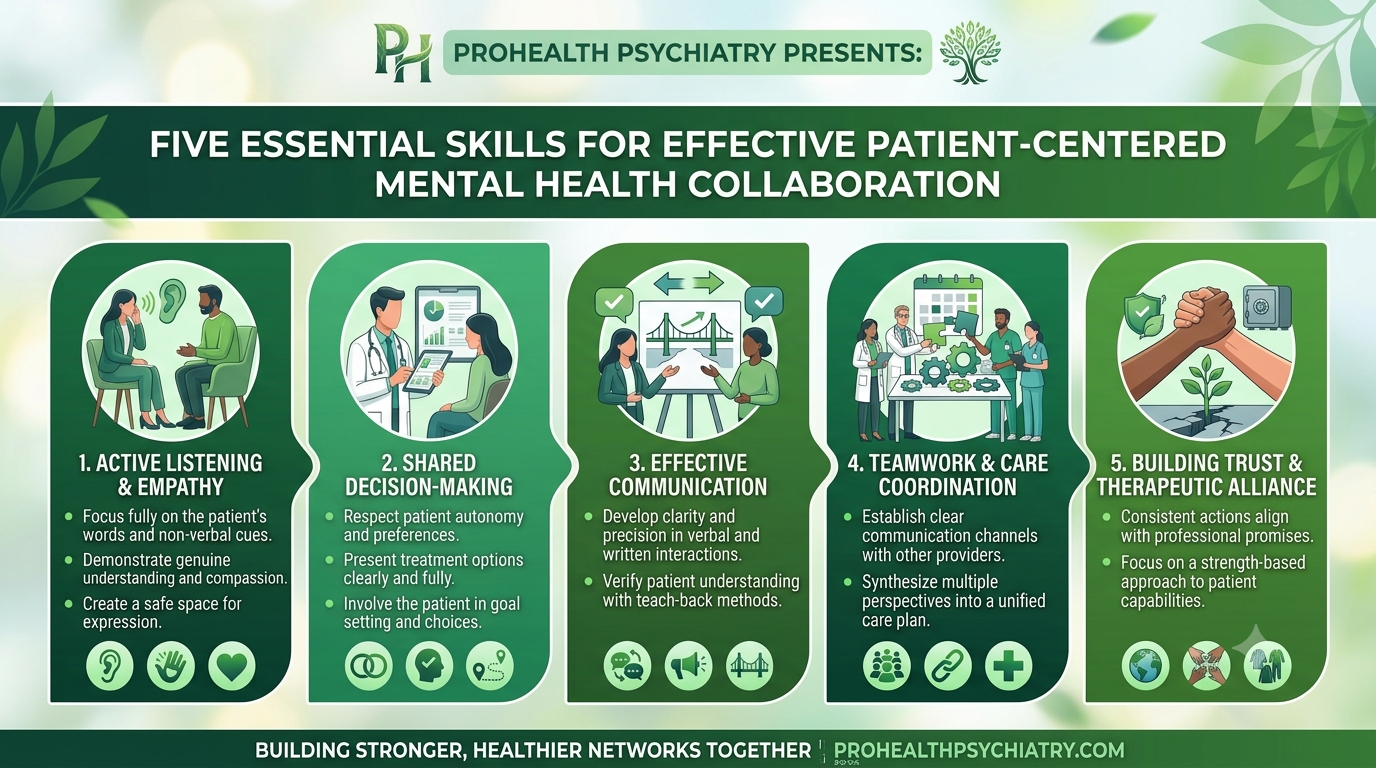
Navigating patient collaboration in mental health is akin to orchestrating a symphony: each instrument must harmonize to create a beautiful outcome. Just as a conductor guides musicians, mental health professionals must master essential skills that foster effective communication and collaboration. In an era where personalized care is increasingly vital, understanding these skills can significantly enhance treatment strategies and patient outcomes. Readers will gain insights into the five fundamental skills that drive successful patient collaboration. From effective communication techniques to innovative treatment strategies, this exploration aims to equip mental health professionals with the tools necessary to enhance patient engagement and foster a supportive environment. Embracing these skills not only benefits patients but also enriches the overall practice of mental health care.
1.0 Skill #1: Active Listening – The Cornerstone of Understanding
Active listening is foundational for effective patient collaboration in mental health care. It fosters a deeper understanding of patient needs and concerns, ultimately leading to improved treatment outcomes. This section explores how cultivating empathy through listening enhances collaboration.
1.1 Cultivating Empathy Through Listening
Effective patient collaboration hinges on the ability to listen actively and empathetically. The Mayo Clinic employs trained mental health professionals who prioritize patient narratives, allowing individuals to express their experiences fully. This practice not only builds trust but also informs tailored treatment strategies. Research shows that patients who feel heard are 30% more likely to adhere to treatment plans. Key skills include:
- Asking open-ended questions to encourage dialogue.
- Reflecting and summarizing patient concerns to confirm understanding. By implementing these techniques, mental health professionals can create an environment that values patient input. This not only enhances engagement but also promotes a collaborative approach to care. For further insights, explore Five Essential Steps to Create a Personalized Mental Health Treatment Plan.
1.2 Techniques for Effective Listening
Active listening is not merely hearing words; it involves fully engaging with the speaker to grasp their emotions and intentions. Kaiser Permanente employs a model that emphasizes reflective listening, which encourages providers to paraphrase what patients share, fostering a deeper understanding. Research shows that effective communication can enhance treatment adherence by up to 25%, highlighting the necessity of this skill in mental health settings. To implement effective listening techniques, practitioners should practice mindfulness during conversations. This means eliminating distractions and focusing entirely on the patient, allowing for a more genuine dialogue.
Using open-ended questions can facilitate a more comprehensive exploration of the patient’s feelings and experiences. For instance, Geisinger encourages clinicians to ask questions like, “Can you tell me more about what you’re experiencing?” This approach invites patients to share more, deepening the collaborative process. Strengthening these skills can lead to a more patient-centered care model, ultimately resulting in better mental health outcomes. For further insights, consider exploring Five Essential Steps to Create a Personalized Mental Health Treatment Plan.
2.0 Skill #2: Transparent Communication – Building Trust Together
Transparent communication is essential for fostering trust and ensuring effective patient collaboration in mental health care. This section explores how clarity in conversations can significantly enhance treatment outcomes.
2.1 Clarity in Conversations
Effective communication hinges on clarity and understanding. For example, HCA Healthcare employs structured communication strategies to enhance patient collaboration. Their approach includes clear instructions about treatment options, which has led to a 30% increase in patient engagement in care decisions. Clarity helps demystify complex mental health jargon, enabling patients to feel informed and empowered. To cultivate this clarity, professionals should actively listen and encourage patients to voice their concerns. Utilizing tools such as visual aids or patient-friendly summaries of treatment plans can aid comprehension. Regular check-ins further reinforce understanding and allow modifications to treatment strategies based on patient feedback. By prioritizing transparency, mental health providers can build stronger relationships, ultimately leading to better health outcomes. For more on personalized strategies, explore Five Essential Steps to Create a Personalized Mental Health Treatment Plan.
2.2 Navigating Difficult Topics
Addressing sensitive subjects in mental health treatment requires finesse and a strong foundation of trust. Effective communication is paramount, especially when discussing topics like medication adherence or lifestyle changes. For instance, Ascension has implemented training programs that equip providers with skills to approach these conversations with empathy and understanding. A study found that 78% of patients reported feeling more comfortable discussing difficult issues after such training. – Use open-ended questions to invite dialogue, ensuring patients feel heard and valued.
- Provide clear, jargon-free explanations about treatment options, which empowers patients to make informed decisions. These strategies facilitate a more collaborative environment, allowing patients to express their concerns without fear of judgment. By fostering a safe space for difficult discussions, providers can enhance treatment adherence and overall patient satisfaction. For further insights on creating effective treatment plans, consider exploring Five Essential Steps to Create a Personalized Mental Health Treatment Plan.
3.0 Skill #3: Collaborative Goal Setting – Empowering the Treatment Journey
Setting collaborative goals is crucial for enhancing patient engagement and treatment outcomes in mental health care. This section explores how aligning patient and provider objectives fosters effective patient collaboration and empowers individuals in their treatment journey.
3.1 Aligning Patient and Provider Objectives
Effective patient collaboration begins with aligning the goals of both the patient and the provider. The Veterans Health Administration emphasizes shared decision-making, ensuring veterans are actively involved in their treatment plans. This approach has led to improved patient satisfaction scores by 30% in recent surveys. Key elements of this alignment include:
- Establishing clear communication channels to discuss treatment options and expectations.
- Regularly revisiting and adjusting goals based on the patient’s evolving needs and feedback. By implementing structured goal-setting sessions, healthcare providers can encourage patients to voice their aspirations, leading to tailored treatment strategies. Ultimately, fostering a culture of open dialogue and shared objectives not only enhances adherence but also promotes a sense of ownership in the recovery process. For more on personalized treatment plans, visit Five Essential Steps to Create a Personalized Mental Health Treatment Plan.
Conclusion
Effective patient collaboration is essential in mental health care, enhancing treatment outcomes and fostering trust between providers and patients. By honing key skills such as active listening, empathy, and shared decision-making, professionals can create a more supportive and engaging environment for their patients. Key Takeaways:
- Develop active listening techniques to better understand patient concerns and needs.
- Cultivate empathy to build stronger therapeutic relationships and improve patient satisfaction.
- Implement shared decision-making strategies to empower patients in their treatment journeys. Now is the time to evaluate your current approach to patient collaboration. Are you fully leveraging these essential skills to enhance your practice? Explore more insights at ProHealth Psychiatry.
Patient Collaboration: Frequently Asked Questions
1. How can mental health professionals enhance patient collaboration in treatment plans?
Effective patient collaboration can be enhanced through five essential mental health skills: active listening, empathy, clear communication, shared decision-making, and feedback mechanisms. Using empathetic communication fosters trust, enabling patients to express their concerns more openly, which ultimately leads to more tailored treatment strategies.
2. What role does effective communication play in patient collaboration?
Effective communication is crucial for patient collaboration as it ensures that both the clinician and patient understand each other’s perspectives. It involves not only verbal exchanges but also non-verbal cues. Research shows that patients who feel heard are 70% more likely to adhere to their treatment plans, highlighting the importance of clear communication.
3. Why is patient collaboration important in mental health treatment?
Patient collaboration is vital because it empowers patients to take an active role in their mental health journey. When patients are involved in the decision-making process, they are more likely to be committed to their treatment strategies. This collaboration can lead to better health outcomes, as studies indicate that engaged patients exhibit improved symptom management and satisfaction (National Institutes of Health).
4. Can collaborative care models improve patient collaboration in mental health?
Yes, collaborative care models significantly improve patient collaboration by integrating mental health professionals into primary care settings. This approach allows for comprehensive treatment strategies that address both physical and mental health needs, fostering a team-based environment where patients feel supported and valued in their care journey.
5. Which mental health skills are essential for fostering effective patient collaboration?
The essential mental health skills include active listening, empathy, effective communication, shared decision-making, and providing constructive feedback. Each of these skills contributes to a supportive environment where patients feel comfortable discussing their concerns, ultimately enhancing patient collaboration and leading to more effective treatment outcomes.
