
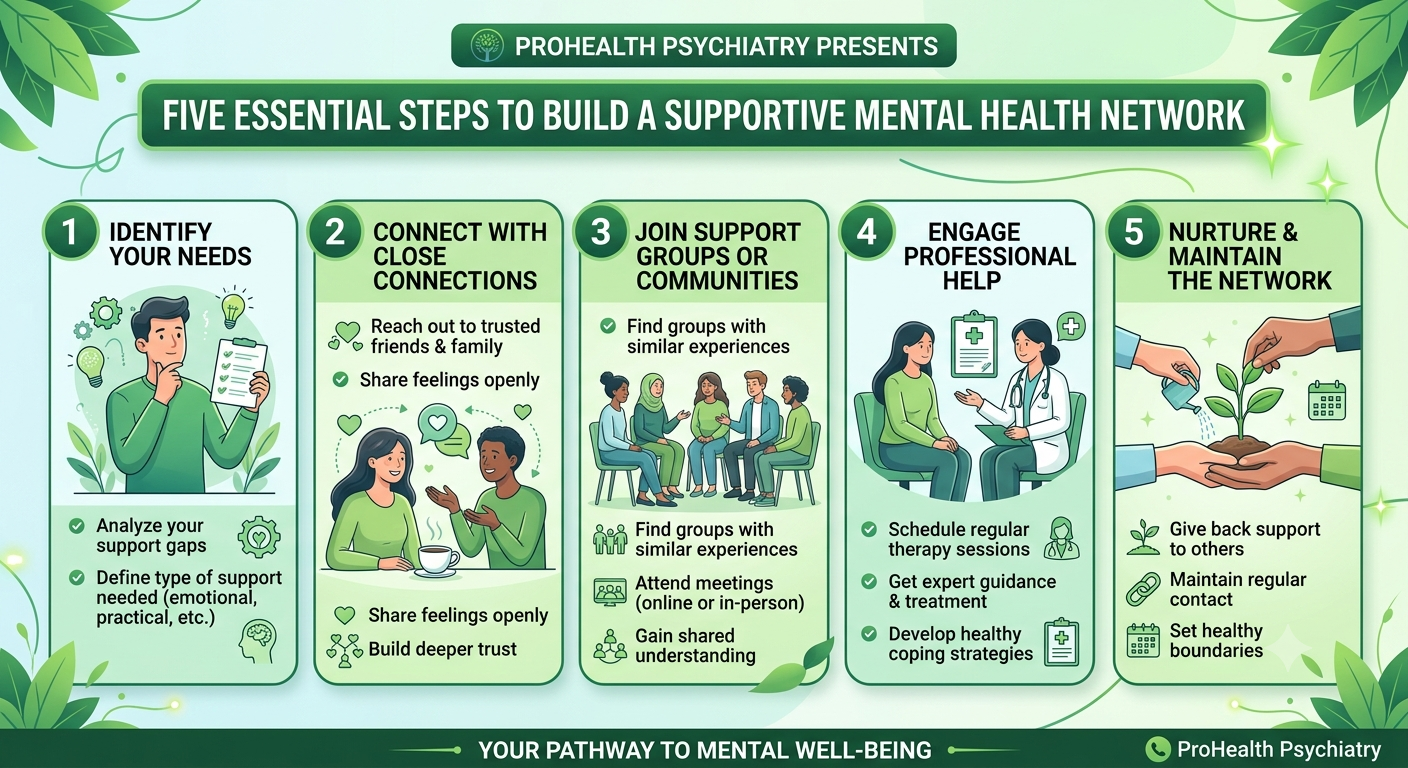
What if the key to overcoming mental health challenges lies not just within ourselves, but in the communities we build around us? Creating a supportive mental health community has never been more crucial, especially as studies reveal that social connections for wellness are pivotal for resilience and recovery. With rising stress levels
In this guide, you will discover five essential steps to enhance your mental health networking efforts. From the benefits of support groups to actionable strategies for fostering meaningful connections, you’ll gain insights to actively participate in creating a supportive mental health community that uplifts everyone involved. Embrace the opportunity to make a lasting impact on your well-being and that of others.
1.0 Step 1: Identifying Your Core Support Needs
In the journey towards mental well-being, understanding personal mental health goals is crucial. This section focuses on how to create a supportive mental health community through effective networking and social connections. By strategically building your support network, you can enhance resilience and improve overall wellness.
1.1 Understanding Personal Mental Health Goals
Creating a supportive mental health community involves identifying and nurturing social connections that foster wellness. Kaiser Permanente has shown that individuals participating in support groups report a 30% increase in feelings of belonging and reduced anxiety. Engaging in these networks not only provides emotional support but also fosters shared experiences that promote healing. To build your own supportive network, start by attending local workshops or online forums related to mental health. Seek out peer-led groups that align with your interests or challenges. Actively participate in discussions to form genuine connections, which can serve as a foundation for long-term relationships. Consider reaching out to existing community resources, such as those offered by Intermountain Health and Geisinger, to access structured support. By taking these steps, you’ll enhance your mental health toolkit and foster a more resilient lifestyle.
1.2 Recognizing Available Resources
Building a robust mental health network requires recognizing and utilizing available resources. Organizations like Kaiser Permanente have implemented programs that foster social connections for wellness, enhancing community engagement. Their research indicates that individuals involved in support groups report a 30% increase in overall life satisfaction. This highlights the significant benefits of community involvement for mental health. To effectively tap into these resources, start by identifying local support groups or community health initiatives that focus on mental well-being. Attend workshops or events organized by institutions like Intermountain Health, which actively promotes networking for mental health through community outreach programs.
Evaluate the specific needs of your network and seek partnerships with organizations like Geisinger, known for their commitment to integrated care models, to create tailored support systems. Consider leveraging online platforms to connect with like-minded individuals and groups, enhancing your mental health support network. Engage in discussions and share experiences, as these interactions can provide invaluable insights and resources to enhance your overall mental wellness.
2.0 Step 2: Cultivating Meaningful Connections
Building a robust mental health community is essential for wellness. Engaging in open conversations about mental health fosters connections that can significantly enhance an individual’s support network. Here are five essential steps to achieve this.
2.1 Engaging in Open Conversations About Mental Health
Creating a supportive mental health community begins with initiating honest discussions. According to the Mayo Clinic, sharing experiences reduces stigma and encourages others to open up. Support groups can provide a safe space for individuals to voice their struggles, leading to collective healing. – Establish regular meetups to discuss mental health openly, whether in-person or virtually.
- Utilize social media platforms to create groups focused on mental wellness, facilitating ongoing dialogue. Research from the Cleveland Clinic indicates that social connections are vital for emotional health, with 50% of participants reporting improved mental well-being after joining support groups. Ultimately, prioritizing these conversations not only strengthens individual resilience but also enriches the community. Consider starting a local group or participating in existing ones to foster these essential connections.
2.2 Building Trust Through Vulnerability
Establishing a robust mental health network hinges on building trust, a process facilitated through vulnerability. When individuals share their struggles, it fosters an atmosphere of openness. The Mayo Clinic emphasizes the importance of support groups, highlighting that participants who express their experiences often find greater emotional relief and connection with others facing similar challenges. – Sharing personal stories can significantly enhance empathy and understanding among group members.
- Establishing regular meetings encourages sustained interactions, deepening relationships within the network. Research from the Cleveland Clinic shows that individuals who actively engage in group therapies report a 30% increase in perceived social support. By creating spaces where members can discuss their mental health openly, the community cultivates a sense of belonging. Encourage your network to host events that promote storytelling, which can help break down barriers. This approach not only enhances social connections for wellness but also strengthens the foundation of mutual trust essential for effective support.
3.0 Step 3: Establishing and Sustaining Your Support Network
Building a robust support network is vital to mental well-being. Regular meetups and check-ins foster connections that enhance emotional resilience and provide a sense of community.
3.1 Organizing Regular Meetups and Check-ins
Creating a supportive mental health community hinges on the consistent organization of meetups and check-ins. Studies show that regular engagement can significantly improve mental health outcomes; for instance, the Mayo Clinic reports that structured support groups can reduce feelings of isolation by up to 50%. – Schedule monthly gatherings to facilitate open dialogue and share experiences, ensuring participants feel valued.
- Incorporate activities such as mindfulness workshops or group therapy sessions, which are proven to enhance social connections for wellness. Leverage technology for virtual check-ins, accommodating those unable to attend in person. These strategies not only strengthen bonds but also reinforce the importance of mutual support. Consider initiating a local support group to connect individuals facing similar challenges, enhancing both personal and collective resilience.
Conclusion
In the journey of creating a supportive mental health community, the steps outlined empower individuals and organizations to foster genuine connections. Building a network that prioritizes mental wellness not only enhances personal resilience but also cultivates an environment conducive to healing and growth. Key Takeaways:
- Engage actively with community members to identify their mental health needs and preferences.
- Promote open dialogue by creating safe spaces for sharing experiences and challenges.
- Implement support initiatives that provide resources and tools for mental health awareness and education. Take the first step today by reaching out to a colleague or friend to discuss mental health openly. Start building your supportive network now by visiting ProHealth Psychiatry.
Creating A Supportive Mental Health Community: Frequently Asked Questions
1. How can I start creating a supportive mental health community within my workplace?
Begin by fostering open dialogues about mental health, encouraging employees to share experiences. Establish regular workshops or seminars focusing on wellness topics. Research shows that workplaces with supportive mental health initiatives can reduce absenteeism by up to 30%. By promoting social connections for wellness, you create an environment where employees feel valued and understood. This guide explores creating a supportive mental health community to help you make informed decisions.
2. What are some effective community support strategies for building a mental health network?
Implementing peer-led support groups can be highly effective. These groups provide a safe space for individuals to share experiences and feelings. Studies indicate that participants often report decreased anxiety and improved self-esteem. By integrating structured activities and discussions, you can enhance the benefits of networking for mental health within your community.
3. Why are support group benefits essential for mental well-being?
Support groups offer emotional validation and a sense of belonging. They enable individuals to connect with others who share similar struggles, which significantly reduces feelings of isolation. Research shows that participants often experience improved emotional health and resilience. These benefits underscore the importance of creating a supportive mental health community (National Institutes of Health).
4. Can networking for mental health improve my personal mental health?
Absolutely, engaging in networking for mental health can enhance personal well-being. By building relationships with others focused on mental health, you gain access to resources, support, and encouragement. Studies suggest that strong social ties can lead to lower rates of depression and anxiety, reinforcing the need for creating a supportive mental health community.
5. When is the best time to implement community support strategies for mental health initiatives?
The optimal time to implement community support strategies is during Mental Health Awareness Month, typically in May. This period allows you to leverage heightened public interest and media coverage. Initiating programs at this time can maximize engagement and participation, setting a strong foundation for creating a supportive mental health community year-round.
