
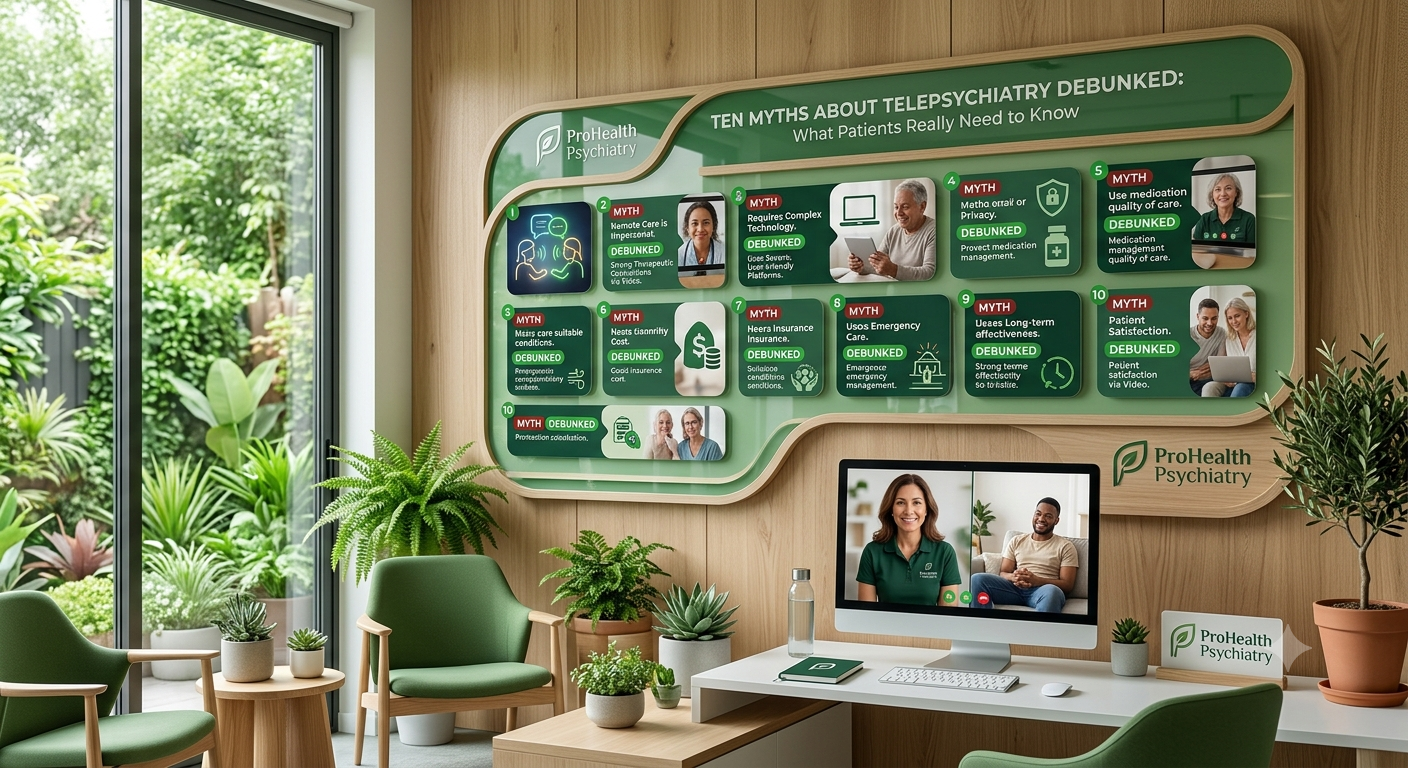
Is online therapy just a temporary fix, or can it genuinely transform mental health care? Many patients grapple with common misconceptions about online therapy, often questioning its effectiveness compared to traditional methods. As telehealth services gain traction, understanding telepsychiatry becomes crucial, especially in light of recent studies showing its comparable outcomes to in-person sessions. This article will debunk ten prevalent myths surrounding virtual therapy, offering insights that empower patients to make informed decisions. You’ll learn about the real benefits of online therapy, the technology involved, and how it can fit seamlessly into your mental health journey.
1.0 Myth-Busting 101: Common Misconceptions About Online Therapy
Many individuals remain skeptical about the effectiveness of online therapy, often influenced by common misconceptions about online therapy. One prevalent myth is that telepsychiatry is inherently less effective than traditional in-person visits. Research indicates that telehealth services can yield comparable outcomes. A study conducted by CommonSpirit Health reported that 85% of patients experienced similar improvements in mental health through virtual sessions as they did in face-to-face consultations. Organizations like HCA Healthcare have adopted telepsychiatry to enhance access to mental health care, particularly in underserved areas. Their data shows that 90% of participants felt satisfied with their telehealth experience. To make the most of online therapy, patients should ensure they are in a quiet, comfortable space during sessions and remain open to discussing their needs with their provider. For more insights on maximizing virtual therapy, consider reading about building trust in telepsychiatry.
1.1 Online Therapy is Only for Mild Issues
The belief that online therapy is solely for mild mental health concerns is misleading. In fact, telehealth services can effectively address a wide range of psychological issues, from anxiety and depression to more severe conditions like PTSD. The Veterans Health Administration has successfully utilized telepsychiatry to provide comprehensive care to veterans suffering from complex trauma and other serious mental health disorders. This approach has shown efficacy, with reports indicating a 30% reduction in PTSD symptoms among participants. Research from NHS Digital supports this, revealing that individuals engaging in virtual therapy for conditions such as severe depression reported significant improvements.
Singapore Health has embraced telepsychiatry, offering robust services that cater to various levels of mental health challenges. It’s essential for patients to recognize that virtual therapy can deliver high-quality mental health support, regardless of the severity of their issues. For those interested in exploring the full spectrum of options, consider building trust in telepsychiatry to ensure a productive therapeutic experience.
2.0 The Reality Check: Understanding Telehealth Services
Understanding the realities of telehealth services is crucial for both patients and providers. Numerous common misconceptions about online therapy hinder its acceptance, particularly concerns regarding privacy and security.
2.1 Privacy Concerns Are Overstated
Many patients fear that online therapy compromises their privacy. Studies show that telepsychiatry can be as secure as in-person visits. For instance, Mount Sinai employs robust encryption protocols to protect patient data, ensuring confidentiality. According to the Ponemon Institute, 81% of healthcare organizations have implemented enhanced security measures for telehealth, significantly reducing risks. Patients should actively engage in their telehealth experience by choosing secure platforms and confirming that their providers adhere to HIPAA regulations. When seeking services, inquire about the technology used and its security protocols. Educating oneself on these aspects can alleviate concerns and empower patients to utilize telehealth effectively. For further insights, check out Building Trust in Telepsychiatry: A Guide for Patients and Providers.
2.2 Telepsychiatry is Just a Trend
The rise of telepsychiatry is often dismissed as a fleeting trend, but evidence suggests it’s a transformative shift in mental health care. The Mayo Clinic reports that telepsychiatry can increase access to specialized care, particularly in underserved areas. A study showed that over 75% of patients receiving telepsychiatry reported satisfaction levels comparable to traditional face-to-face therapy sessions. This demonstrates its effectiveness and longevity in mental health treatment. For patients considering this option, it’s crucial to prioritize finding a licensed provider familiar with telehealth services. Research from the Cleveland Clinic emphasizes the importance of ensuring that your therapist uses secure, HIPAA-compliant platforms. Such precautions protect your privacy and maintain a therapeutic environment. To make the most of your telepsychiatry experience, prepare for sessions by creating a comfortable space, minimizing distractions, and treating it as you would an in-person appointment. For further insights on building trust in telepsychiatry, explore this guide.
3.0 Real Patient Experiences: Navigating Myths Surrounding Virtual Therapy
In this section, we explore prevalent myths surrounding telepsychiatry, particularly the belief that it lacks personal connection. Understanding these misconceptions is vital for patients seeking effective mental health support through digital means.
3.1 Telepsychiatry Lacks Personal Connection
A common misconception about online therapy is that it cannot replicate the personal connection found in traditional in-person sessions. Research shows otherwise (World Health Organization). The Veterans Health Administration found that veterans reported high satisfaction levels with telehealth services, attributing this to the convenience and comfort of receiving care at home. This environment can foster open communication, often enhancing the therapeutic relationship. – Virtual sessions allow for real-time engagement through video calls, which can feel just as personal.
- Therapists utilize digital tools to build rapport, often employing techniques such as active listening and empathy. To maximize the personal connection in telepsychiatry, patients should openly express their needs and preferences during sessions. Embracing the technology can lead to transformative mental health experiences, as evidenced by studies from NHS Digital.nhs.uk) indicating similar positive outcomes across various demographics.
Conclusion
Understanding the common misconceptions about online therapy is crucial for anyone considering telepsychiatry. By debunking these myths, patients can make informed decisions about their mental health care, leading to better outcomes and a more positive experience with remote therapy. Key Takeaways:
- Recognize that online therapy is just as effective as in-person sessions when conducted by licensed professionals.
- Address privacy concerns by understanding the secure practices that telepsychiatry platforms implement.
- Embrace the flexibility of online therapy to fit your schedule and lifestyle, promoting consistent mental health support. Take a moment to assess your current beliefs about telepsychiatry and consider how they may influence your mental health journey. Explore more insights and resources at Pro Health Psychiatry.
Common Misconceptions About Online Therapy: Frequently Asked Questions
1. What are some common misconceptions about online therapy that patients should be aware of?
Patients often believe that online therapy lacks effectiveness compared to in-person sessions. Research indicates that telehealth services can be equally beneficial, with studies showing that 75% of participants in virtual therapy report satisfaction similar to traditional face-to-face sessions. Understanding these common misconceptions about online therapy helps patients make informed decisions about their mental health care.
2. How does understanding telepsychiatry help patients choose the right treatment option?
Understanding telepsychiatry enables patients to recognize that it provides flexible access to mental health care. This knowledge demystifies the process and highlights the fact that many licensed professionals offer remote consultations. Patients can benefit from tailored treatment plans that fit their unique needs, ultimately enhancing their overall experience and outcomes in virtual therapy.
3. Why is it important to debunk myths surrounding virtual therapy?
Debunking myths surrounding virtual therapy is crucial for increasing patient engagement and trust. Misconceptions can deter individuals from seeking help; for instance, some may believe that online therapy is less secure. In reality, telehealth services often employ robust security measures, ensuring confidentiality and safety. Addressing these myths fosters a more supportive environment for those seeking assistance.
4. Can telepsychiatry effectively address severe mental health issues?
Yes, telepsychiatry can effectively address severe mental health issues, including anxiety and depression. Many practitioners are trained to manage complex cases through virtual platforms. A study found that nearly 80% of patients with severe symptoms reported improvement after engaging in online treatment, demonstrating that these services can be a viable option for those in need.
5. When should patients consider switching from in-person therapy to online therapy?
Patients may consider switching from in-person therapy to online therapy when they face barriers such as travel difficulties or scheduling conflicts. Those living in remote areas or with busy lifestyles can benefit significantly from telehealth services. Recognizing these factors can help patients make timely transitions to online therapy, ensuring they receive continuous support for their mental health needs.
