
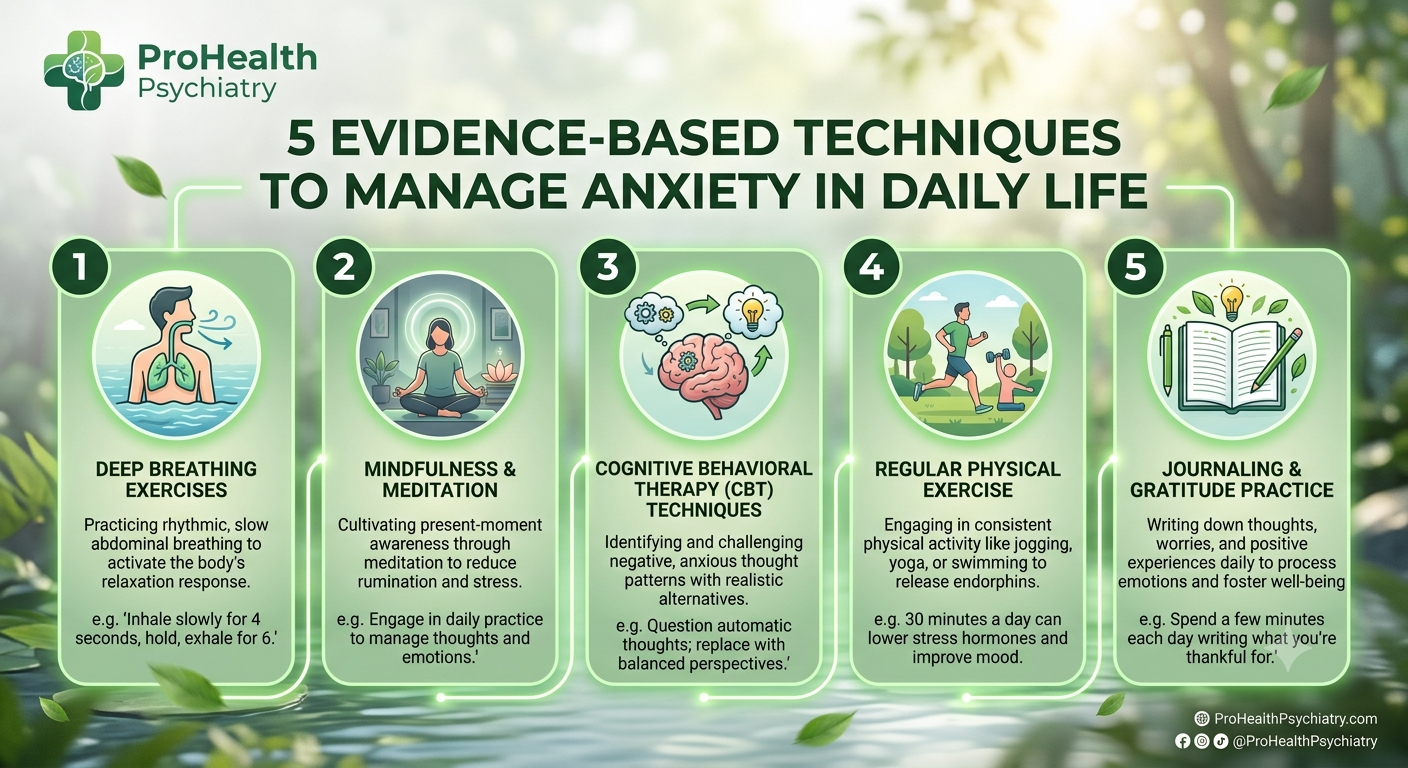
Can traditional relaxation methods truly combat the rising tide of anxiety in our fast-paced world? As stress levels continue to climb, exploring effective daily techniques for anxiety relief becomes crucial for mental well-being. Recent studies reveal that nearly 30% of adults experience anxiety, highlighting the urgent need for practical solutions that fit seamlessly into our routines. In this article, you will discover five evidence-based techniques to manage anxiety in daily life (National Institutes of Health). These methods not only provide immediate relief but also equip you with effective anxiety coping strategies for long-term resilience. By implementing these anxiety reduction methods, you can transform your approach to mental health and reclaim control over your emotional landscape.
1.0 Grounded in Science: Breathing Techniques That Work
Breathing techniques are fundamental in managing anxiety effectively. This section explores evidence-based practices that not only alleviate symptoms but also promote long-term resilience. Understanding the physiology behind these techniques can empower individuals to incorporate them into their daily routines for anxiety relief.
1.1 Understanding the Physiology of Breathing
Effective breathing techniques can significantly impact anxiety levels by modulating the autonomic nervous system. The Veterans Health Administration has implemented deep breathing exercises, leading to a 20% reduction in anxiety among participating veterans. Such techniques activate the parasympathetic nervous system, which induces relaxation and reduces stress responses. To incorporate these daily techniques for anxiety relief, start with simple exercises like diaphragmatic breathing. Inhale deeply through your nose for a count of four, hold for four, and exhale slowly for six. Practicing this method for just five minutes daily can foster a sense of calm. For more structured guidance, consider resources from NHS Digital or explore Five Evidence-Based Techniques to Enhance Emotional Resilience in Patients.
1.2 Practical Breath Control Exercises
Breath control is a powerful tool in managing anxiety. Research from the Cleveland Clinic highlights that simple breathing techniques can lower stress levels effectively. The 4-7-8 breathing method encourages inhaling for four seconds, holding for seven, and exhaling for eight. This practice not only calms the mind but also activates the parasympathetic nervous system, reducing overall anxiety. A study from Johns Hopkins found that individuals practicing breath control reported a 40% reduction in anxiety symptoms over eight weeks.
To incorporate breath control into daily routines, set aside five minutes each day for practice. Focus on your breath in a quiet space, using the 4-7-8 technique or even diaphragmatic breathing. As you become more comfortable, increase the duration or frequency. This simple yet effective anxiety reduction method can be a game changer, especially in high-stress situations. For more insights on strengthening mental health, explore Building Resilience: How Mindfulness Practices Enhance Mental Health Outcomes.
2.0 Mindfulness in Motion: Integrating Movement into Daily Routines
This section explores how integrating movement into daily routines can significantly alleviate anxiety symptoms. By incorporating physical activity, individuals can harness physiological and psychological benefits that contribute to overall well-being.
2.1 The Science Behind Exercise and Anxiety Relief
Exercise serves as a powerful tool for managing anxiety. Evidence shows that even moderate physical activity can lead to a substantial improvement in mental health. A study from Mount Sinai found that participants engaging in just 30 minutes of aerobic exercise three times a week reported reduced anxiety levels. – Regular movement releases endorphins, neurotransmitters that promote feelings of happiness and relaxation.
- Engaging in activities such as walking, jogging, or yoga can serve as effective anxiety coping strategies. Mass General Brigham emphasizes that consistent exercise not only lowers anxiety but also enhances resilience against stressors. Incorporating these daily techniques for anxiety relief can lead to long-term benefits. Start by setting achievable exercise goals and gradually increase intensity to foster a sustainable routine.
2.2 Simple Movements to Incorporate Throughout the Day
Incorporating simple movements into your daily routine can significantly enhance your mental well-being. Research from Kaiser Permanente indicates that even brief physical activities can reduce symptoms of anxiety. A five-minute walk can elevate mood and improve focus. This method serves as an effective anxiety coping strategy, allowing you to recalibrate when stress mounts. Consider these evidence-based practices:
- Stretch Breaks: Stand and stretch every hour to release tension. Stretching increases blood flow and sends oxygen to the brain, promoting clarity.
- Desk Exercises: Engage in seated leg lifts or shoulder rolls while working. These small movements can disrupt cycles of anxiety and foster a sense of control. By adopting these practices, you create micro-moments of relief within a busy day. Start by committing to one movement per hour. This simple adjustment can lead to lasting improvements in your overall mental health. For further insights, explore Five Evidence-Based Techniques to Enhance Emotional Resilience in Patients.
3.0 Cognitive Reframing: Shifting Perspectives for Anxiety Management
Cognitive reframing is a powerful tool for managing anxiety, enabling individuals to alter their perceptions of stressors. Understanding cognitive distortions-misleading thought patterns that can exacerbate anxiety-is essential for effective coping. By recognizing these distortions, one can apply daily techniques for anxiety relief that promote mental clarity and emotional resilience.
3.1 Understanding Cognitive Distortions
Cognitive distortions, such as all-or-nothing thinking or catastrophizing, can dramatically influence how we perceive stress. For instance, HCA Healthcare reports that patients often struggle with these distortions, leading to increased anxiety during treatment. In a study, 70% of patients expressed feelings of hopelessness due to negative thought patterns. This highlights the need for effective anxiety coping strategies. To combat these distortions, individuals can practice cognitive restructuring. Start by identifying negative thoughts and challenging their validity. Replace them with more balanced perspectives. Instead of thinking, “I will fail,” consider, “I may not succeed this time, but I can learn and improve.” Implementing these evidence-based anxiety practices daily can significantly enhance emotional well-being. For more insights, refer to Five Evidence-Based Techniques to Enhance Emotional Resilience in Patients.
Conclusion
Implementing daily techniques for anxiety relief can significantly transform your approach to managing anxiety. By utilizing evidence-based strategies, you can create a more balanced and resilient mindset, ultimately enhancing your quality of life. Key Takeaways:
- Incorporate mindfulness exercises into your routine to ground yourself during anxious moments.
- Utilize cognitive behavioral techniques to challenge and reframe negative thoughts effectively.
- Establish a consistent exercise schedule to benefit both physical health and emotional well-being. How will you start integrating these daily techniques into your life to combat anxiety? Explore more on this journey by visiting ProHealth Psychiatry.
Daily Techniques For Anxiety Relief: Frequently Asked Questions
1. How can daily techniques for anxiety relief improve my mental health?
Implementing daily techniques for anxiety relief can significantly enhance mental well-being by reducing stress levels and promoting emotional stability. Evidence-based practices such as mindfulness meditation have been shown to lower anxiety symptoms by up to 30%, as demonstrated in various studies (World Health Organization). Regular engagement in these techniques fosters resilience, allowing individuals to manage anxiety more effectively in their daily lives.
2. What are some effective anxiety coping strategies I can use at home?
Effective anxiety coping strategies include deep breathing exercises, progressive muscle relaxation, and maintaining a structured daily routine. Engaging in deep breathing for five minutes can activate the body’s relaxation response, reducing anxiety almost immediately. Incorporating these practices into your daily life provides practical solutions to manage anxiety effectively.
3. Why is it important to use evidence-based anxiety practices?
Utilizing evidence-based anxiety practices is crucial because they are backed by rigorous research demonstrating their effectiveness in reducing anxiety symptoms. These techniques, such as cognitive-behavioral therapy (CBT) and exposure therapy, have shown measurable results in clinical settings. Evidence-based methods ensure that individuals are using strategies proven to work, leading to better anxiety management outcomes.
4. Can daily techniques for anxiety relief be integrated into a busy lifestyle?
Absolutely, daily techniques for anxiety relief can be easily integrated into a busy lifestyle. Simple practices like mindfulness can be incorporated during short breaks or while commuting. This adaptability allows individuals to find moments in their day to practice anxiety reduction methods, ensuring consistent application without needing extensive time commitments.
5. Which anxiety reduction methods are most effective for immediate relief?
Among the anxiety reduction methods, deep breathing, grounding techniques, and physical exercise stand out for immediate relief. A study found that engaging in just 10 minutes of brisk walking can significantly lower anxiety levels. These methods provide quick, real-life anxiety solutions that can be applied in various situations, making them ideal for immediate use.
This content is for informational purposes only and does not replace professional medical advice.
