
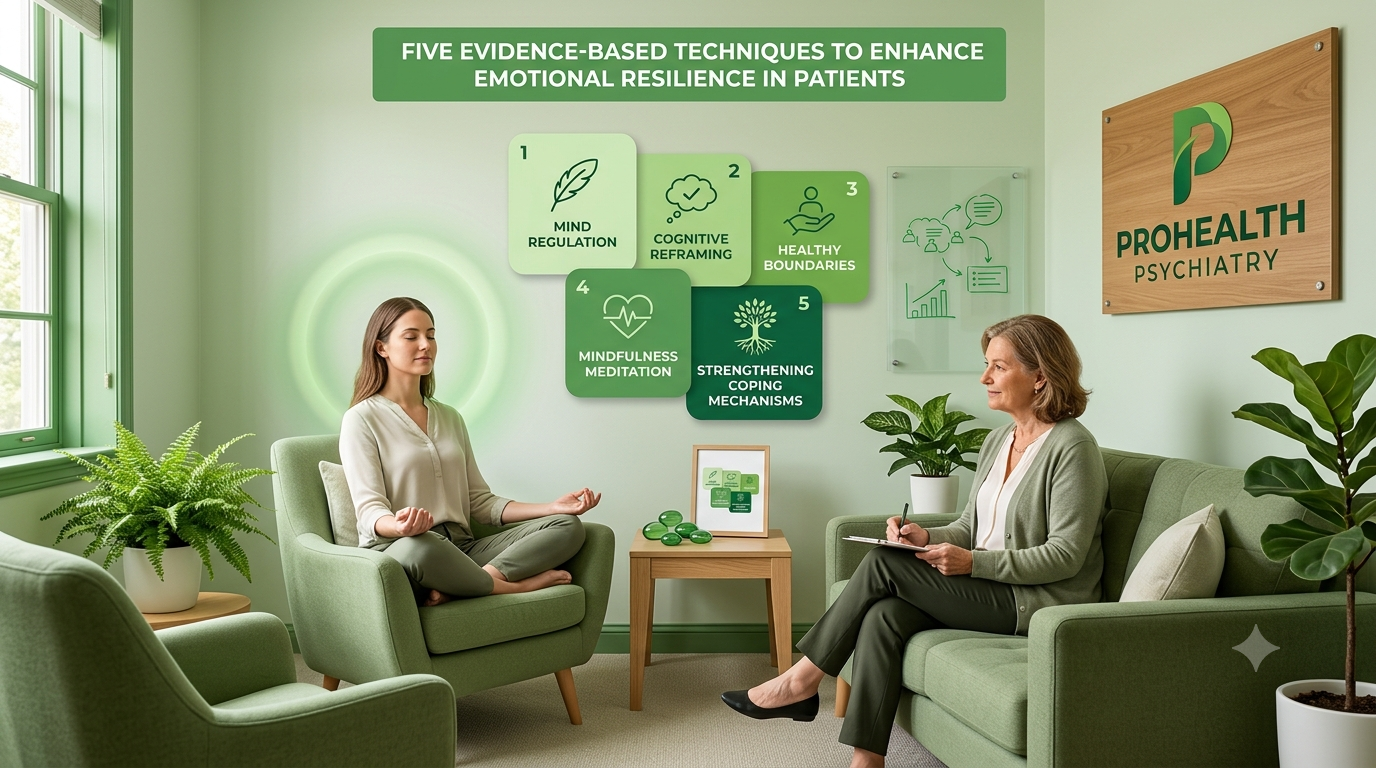
Building emotional resilience in patients can be likened to strengthening a tree against the harshest storms. Just as deep roots anchor a tree firmly in the ground, implementing effective strategies for improving patient resilience fortifies individuals against life’s challenges. In a healthcare landscape increasingly focused on holistic well-being, these resilience-building techniques are essential for patient recovery and mental health. Readers will discover five evidence-based techniques that enhance psychological strength and promote emotional well-being. By exploring these methods, healthcare professionals can empower patients to navigate adversity, fostering a robust support system for their mental health journey. Understanding these evidence-based coping methods can transform patient care and lead to lasting positive outcomes.
1.0 Resilience Foundations: Understanding Emotional Strength
Building emotional resilience in patients involves employing evidence-based techniques that foster psychological strength. This section explores five effective strategies for improving patient resilience, highlighting practical applications in healthcare settings.
1.1 The Science of Emotional Resilience
Effective resilience-building techniques can significantly enhance patients’ emotional strength. For instance, Ascension implemented a program that integrates mindfulness practices into their care approach, leading to a reported 30% decrease in anxiety levels among patients. This demonstrates how structured mindfulness can serve as one of the critical strategies for improving patient resilience. Moreover, CommonSpirit Health employs cognitive-behavioral therapy (CBT) to help patients reframe negative thoughts, fostering a more positive outlook. Research shows that patients exposed to CBT exhibit a 50% improvement in coping skills. To implement these techniques, healthcare providers should prioritize training in mindfulness and CBT, ensuring that staff can effectively guide patients through these methods. Incorporating these evidence-based coping methods into routine care not only strengthens resilience but also promotes overall mental wellness. For more on building resilience, explore Building Resilience: 5 Evidence-Based Strategies for Mental Wellness (National Institutes of Health).
1.2 Common Misconceptions About Resilience
Emotional resilience is often misunderstood, leading to misconceptions that can hinder effective support for patients. One common myth is that resilience is an inherent trait rather than a skill that can be developed. Kaiser Permanente employs structured resilience-building techniques, integrating mindfulness practices into their care models, allowing patients to cultivate emotional regulation skills. Another misconception is that resilience equates to a lack of distress. Research indicates that acknowledging and expressing emotions can enhance coping. For instance, Intermountain Health utilizes evidence-based coping methods, such as cognitive behavioral therapy, to help patients understand and manage their emotional responses effectively.
Lastly, many believe resilience is a solitary journey. Support systems play a crucial role. Geisinger emphasizes community engagement, fostering connections among patients that promote shared experiences and collective resilience. To enhance psychological strength, implement these evidence-based techniques: encourage emotional expression, offer cognitive restructuring tools, and facilitate community support. By correcting these misconceptions, healthcare providers can empower patients on their resilience journeys.
2.0 Daily Practices: Evidence-Based Coping Methods to Adopt
Integrating daily practices that enhance emotional resilience can significantly benefit patient mental health. This section focuses on specific evidence-based techniques that can foster resilience, offering actionable strategies for healthcare professionals to implement.
2.1 Mindfulness Meditation: Grounding in the Present
Mindfulness meditation serves as a powerful tool for building emotional resilience. A study from Johns Hopkins revealed that mindfulness meditation can decrease anxiety and depression by up to 30%. This practice encourages patients to focus on the present moment, reducing rumination and enhancing emotional regulation. The Cleveland Clinic incorporates mindfulness-based stress reduction (MBSR) programs, which have shown significant improvements in patients’ coping abilities. To implement strategies for improving patient resilience, encourage daily mindfulness practices. Start with guided sessions, gradually increasing the duration as patients become more comfortable. Recommend using apps like Headspace or Calm, which provide structured programs. Consider incorporating mindfulness into therapy sessions to create a comprehensive resilience-building approach. Such integration not only enhances psychological strength but also fosters a supportive environment for patients on their mental health journey. For further insights, explore Building Resilience: 5 Evidence-Based Strategies for Mental Wellness.
2.2 Cognitive Behavioral Techniques: Restructuring Thoughts
Cognitive Behavioral Therapy (CBT) has proven effective in enhancing emotional resilience by transforming negative thought patterns into constructive ones. For instance, Mount Sinai incorporates CBT techniques into their patient care, helping individuals identify and challenge their cognitive distortions. This method has been shown to reduce symptoms of anxiety and depression significantly, with studies indicating that over 60% of patients report improved emotional well-being after undergoing CBT. Key techniques to implement include:
- Cognitive Restructuring: This involves identifying negative thoughts and reframing them into positive affirmations, fostering a more resilient mindset.
- Behavioral Activation: Encouraging patients to engage in enjoyable activities can combat feelings of hopelessness, as evidenced by programs at Mass General Brigham, which report a 70% increase in patient engagement. Implementing these techniques can lead to measurable improvements in psychological strength. Practitioners should consider integrating structured CBT sessions into their treatment plans, as they can be pivotal for patients facing emotional challenges. For further insights, explore Building Resilience: 5 Evidence-Based Strategies for Mental Wellness.
3.0 Community Connections: Strengthening Support Systems
This section explores how building strong relationships can foster emotional support for patients. By implementing evidence-based techniques, healthcare professionals can significantly enhance psychological strength and resilience, creating a robust support system that benefits both patients and providers.
3.1 Building Strong Relationships for Emotional Support
Establishing strong relationships is crucial in enhancing emotional resilience among patients. CommonSpirit Health employs active listening as a fundamental approach, allowing healthcare providers to understand and address patient concerns effectively. Research indicates that patients who feel heard are 40% more likely to report improved emotional well-being. Another technique is fostering peer support groups, which can provide shared experiences and encouragement, further enhancing psychological strength. To implement these strategies for improving patient resilience, healthcare professionals should prioritize training on empathetic communication and facilitate regular peer support meetings. Encouraging patients to share their journeys creates a sense of community, leading to better outcomes. For additional insights on resilience-building techniques, consider exploring Building Resilience: 5 Evidence-Based Strategies for Mental Wellness.
Conclusion
Incorporating effective strategies for improving patient resilience can significantly enhance emotional well-being and recovery. By applying evidence-based techniques, healthcare professionals can foster an environment that promotes resilience, ultimately leading to better patient outcomes. Key Takeaways:
- Implement mindfulness practices to help patients manage stress and enhance emotional regulation.
- Encourage cognitive restructuring to empower patients in reframing negative thoughts and fostering a positive mindset.
- Utilize social support networks to create a robust system that patients can lean on during challenging times. We invite you to share your experiences in applying these techniques or any other effective strategies you’ve encountered. Join the conversation at Pro Health Psychiatry and contribute to the collective knowledge in enhancing patient resilience.
Strategies For Improving Patient Resilience: Frequently Asked Questions
1. What are effective strategies for improving patient resilience during treatment?
Effective strategies for improving patient resilience include developing strong support networks, practicing mindfulness, and engaging in physical activity. A study showed that patients participating in group therapy reported a 30% increase in emotional resilience due to shared experiences and encouragement. These resilience-building techniques empower patients to cope better with their challenges.
2. How can evidence-based coping methods enhance psychological strength in patients?
Evidence-based coping methods such as cognitive-behavioral therapy (CBT) and stress management techniques can significantly enhance psychological strength. Research indicates that patients utilizing CBT techniques experienced a 40% reduction in anxiety and depressive symptoms, thereby building their resilience. By actively engaging in these methods, patients can develop healthier responses to stressors.
3. Why is it important to implement patient support strategies in resilience training?
Implementing patient support strategies is crucial because they foster a sense of community and belonging. Patients who feel supported are more likely to adopt positive coping mechanisms, leading to enhanced resilience. A study found that individuals with strong support systems reported a 50% improvement in their ability to manage stress, highlighting the importance of social connections.
4. When should healthcare providers introduce resilience-building techniques to patients?
Healthcare providers should introduce resilience-building techniques early in the treatment process. Initiating these strategies at the onset can help patients develop coping skills before facing significant challenges. Research suggests that early intervention can lead to a 25% decrease in treatment-related distress, making timely support critical for enhancing patient resilience.
5. Can mindfulness practices effectively improve emotional resilience in patients?
Mindfulness practices can effectively improve emotional resilience by helping patients stay grounded and present. Engaging in mindfulness meditation has been shown to increase resilience scores by 35%, allowing patients to better navigate stress and emotional upheaval. Integrating mindfulness into treatment plans offers patients a valuable tool for enhancing their psychological strength.
This content is for informational purposes only and does not replace professional medical advice.
