
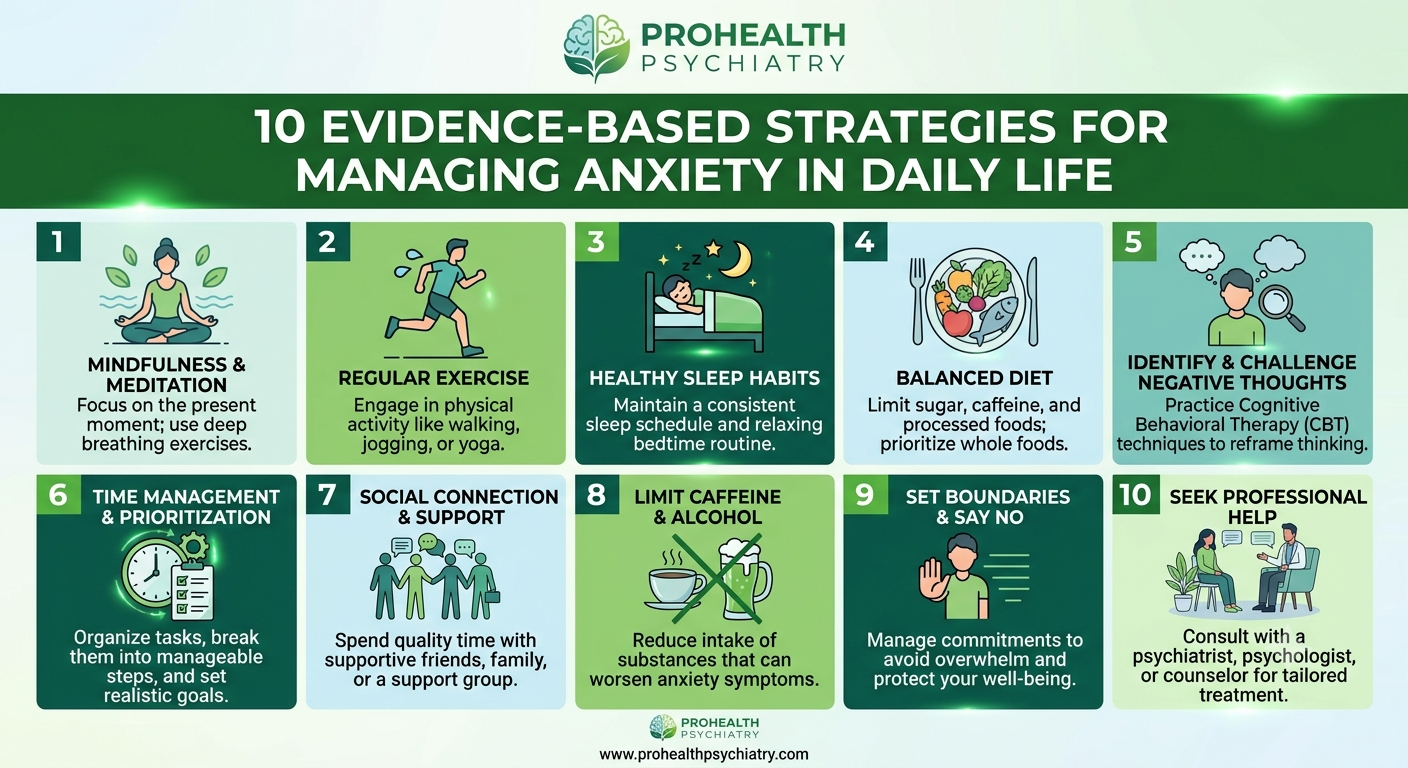
Ignoring anxiety as a simple mood issue is a misconception that can hinder effective management. In reality, implementing daily practices for anxiety relief can significantly enhance mental wellness. With recent studies showing that nearly 31% of adults experience anxiety disorders at some point, these strategies are essential in today’s fast-paced world of uncertainty. Readers will discover ten evidence-based strategies that can transform their approach to managing anxiety. From mindfulness techniques to structured breathing exercises, each method is backed by research and designed to fit seamlessly into daily routines. By embracing these anxiety coping strategies, individuals can cultivate resilience and improve their overall quality of life.
1.0 Harnessing Mindfulness: Your Daily Anchor
Integrating mindfulness into your daily routine can significantly enhance your ability to manage anxiety. Understanding how to leverage present awareness can serve as a foundation for effective anxiety coping strategies. Research shows that consistent mindfulness practices can lead to reduced anxiety levels and improved mental health outcomes.
1.1 The Power of Present Awareness
Engaging in mindfulness meditation has proven effective for anxiety relief. A study by Kaiser Permanente revealed that participants practicing mindfulness techniques reported a 30% decrease in anxiety symptoms after just eight weeks. This highlights the potential of daily practices for anxiety relief. Techniques such as mindful breathing and body scans can ground individuals in the moment, reducing ruminative thoughts. To implement these practices, set aside a few minutes each day for meditation or mindful breathing exercises. Start with deep, slow breaths and focus on the sensations of your body. Consistency is key; aim for at least 10 minutes daily to cultivate a habit. Explore resources from Intermountain Health to find guided sessions that fit your schedule and preferences.
1.2 Breathing Techniques for Instant Calm
Harnessing effective breathing techniques can provide immediate relief from anxiety. Studies show that controlled breathing can reduce stress hormones and activate the body’s relaxation response. For example, HCA Healthcare reports a 20% decrease in anxiety symptoms among patients who practiced deep breathing exercises regularly. These techniques work by slowing down the heart rate and promoting a sense of calm. To incorporate breathing exercises into your routine, try the 4-7-8 technique. Inhale deeply through your nose for four seconds, hold your breath for seven seconds, and then exhale slowly through your mouth for eight seconds.
Practicing this for just five minutes can significantly lower anxiety levels. CommonSpirit Health recommends using this method before stressful situations, such as public speaking or meetings, to enhance focus and reduce tension. Integrating these techniques into your daily mental wellness practices can create a powerful tool for managing anxiety. For more strategies, explore Five Evidence-Based Techniques to Enhance Resilience in Mental Health Treatment (World Health Organization).
2.0 Physical Activity: Movement as Medicine
Physical activity serves as a cornerstone for effective anxiety management. Incorporating exercise into daily routines not only boosts physical health but also significantly enhances mental wellness. Research shows that regular exercise can reduce anxiety symptoms by up to 50%, making it an essential practice for those seeking relief. For instance, Ascension reports that patients engaged in structured physical activity programs experience improved mood and reduced anxiety levels. To implement daily practices for anxiety relief, consider integrating various forms of exercise into your routine. Activities like yoga, brisk walking, or cycling can be particularly beneficial.
Aim for at least 150 minutes of moderate exercise per week, as recommended by the CDC. Additionally, HCA Healthcare emphasizes the importance of consistency; even 10-minute sessions can provide immediate anxiety relief. Engage with community resources such as local fitness classes or online platforms to stay motivated. Embracing these evidence-based anxiety techniques will not only foster resilience but also improve overall mental health. For more insights on mental wellness practices, explore Five Essential Strategies for Supporting Mental Health in the Workplace.
2.1 Incorporating Movement into Your Daily Life
Engaging in regular physical activity can significantly mitigate anxiety symptoms. Research from Mount Sinai indicates that even moderate exercise, like brisk walking for 30 minutes, can reduce anxiety levels by up to 20%. This is attributed to the endorphin release during physical activity, which enhances mood and fosters mental wellness. UPMC’s studies show that patients who participated in group exercise programs reported improved coping mechanisms and a greater sense of community, reinforcing the social aspect of movement. To effectively incorporate movement into your daily routine, aim for a mix of aerobic exercises like cycling or swimming, and strength training.
Start small by scheduling short sessions throughout your day. Consider walking during breaks or joining a local fitness class. Establishing a consistent routine not only aids in managing anxiety but also builds resilience over time. For more tailored strategies, explore Five Essential Strategies for Supporting Mental Health in the Workplace to integrate movement seamlessly into your life.
3.0 Social Connections: Building Your Support Network
Establishing a robust support network is crucial in managing anxiety effectively. Social connections can provide comfort and understanding, which are vital for mental wellness. Evidence suggests that engaging with supportive relationships can lead to lower anxiety levels and improved overall well-being.
3.1 The Role of Social Support in Anxiety Management
Research from HCA Healthcare highlights that individuals with strong social support systems report a 50% reduction in anxiety symptoms. This illustrates the importance of building and maintaining connections. Participating in support groups or community activities can foster relationships that provide emotional backing. To integrate these daily practices for anxiety relief, consider scheduling regular check-ins with friends or family. Engaging in shared activities, such as group exercise or mindfulness workshops, can enhance feelings of belonging and reduce anxiety. Exploring resources from organizations like CommonSpirit Health can also provide insights into effective mental wellness practices. Establishing these supportive environments allows individuals to develop effective anxiety coping strategies and reinforces resilience against stress.
Conclusion
Implementing effective daily practices for anxiety relief can significantly enhance your mental well-being. By incorporating evidence-based strategies, such as mindfulness and structured routines, you can mitigate anxiety’s impact on your daily life and foster resilience. Key Takeaways:
- Adopt mindfulness techniques to cultivate present-moment awareness and reduce racing thoughts.
- Establish structured daily routines that provide predictability and control, alleviating anxiety triggers.
- Engage in regular physical activity, as exercise is proven to lower anxiety levels and improve mood. Explore more about these strategies and additional resources to support your journey toward anxiety management by visiting ProHealth Psychiatry.
Daily Practices For Anxiety Relief: Frequently Asked Questions
1. What are effective daily practices for anxiety relief?
Effective daily practices for anxiety relief include mindfulness meditation, physical activity, and structured breathing exercises. Engaging in just 10 minutes of mindfulness meditation daily has been shown to significantly reduce anxiety levels. Incorporating these activities into your routine can help create a more balanced mental state and enhance overall well-being.
2. How can I implement evidence-based anxiety techniques in my daily routine?
Implementing evidence-based anxiety techniques can involve setting aside time for cognitive-behavioral therapy (CBT) exercises and practicing exposure therapy in controlled environments. Gradually confronting a specific fear in small, manageable steps can help reduce anxiety over time. Consistency in applying these techniques fosters resilience against anxiety triggers.
3. Why are daily practices for anxiety relief important for mental wellness?
Daily practices for anxiety relief are crucial as they promote resilience and emotional regulation. Research indicates that consistent engagement in mental wellness practices can lower the frequency and intensity of anxiety symptoms. Over time, these practices empower individuals to manage stress effectively and enhance their overall quality of life.
4. Can anxiety coping strategies be tailored for individual needs?
Yes, anxiety coping strategies can and should be tailored to meet individual needs. Personalizing these strategies involves identifying specific triggers and developing a unique combination of techniques, such as journaling or practicing gratitude. Creating a customized approach increases the likelihood of successfully managing anxiety and improving daily functioning.
5. Which daily practices for anxiety relief are most effective for reducing stress in the moment?
Practices like deep breathing exercises, progressive muscle relaxation, and short physical activities are highly effective for immediate stress reduction. Engaging in just a few minutes of deep breathing can lower your heart rate and promote calmness, making it an excellent tool for managing acute anxiety episodes.
