
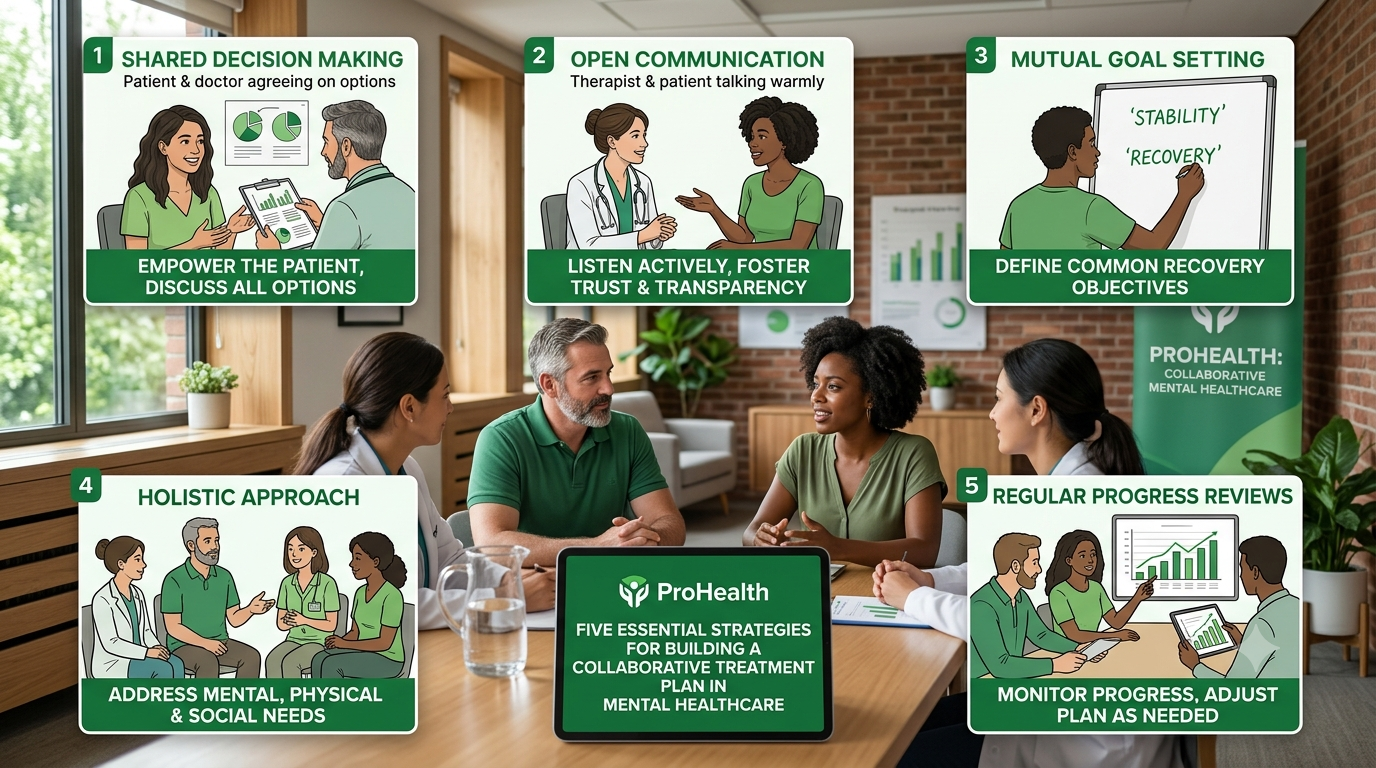
Building a collaborative treatment plan in mental healthcare resembles crafting a symphony, where each musician’s contribution shapes the final performance. Just as a conductor harmonizes diverse instruments, effective collaborative treatment integrates insights from patients, providers, and family members. This approach is increasingly vital in today’s landscape, where personalized care can lead to improved outcomes and patient satisfaction. Readers will discover five essential strategies for fostering patient involvement and enhancing mental health strategies. By exploring key elements such as communication, goal-setting, and continuous feedback, this guide will empower healthcare professionals to create dynamic treatment plans that resonate with the unique needs of each individual.
1.0 The Foundation of Patient-Centric Mental Health Strategies
This section delves into the importance of patient involvement in mental health care strategies. Engaging patients in their treatment fosters better outcomes and enhances satisfaction. Understanding how to implement effective collaborative treatment is crucial for mental health professionals. According to the American Psychological Association, patient engagement is linked to significant improvements in treatment adherence and overall mental health.
1.1 Understanding Patient Involvement
Effective patient involvement is vital for successful mental health outcomes. Collaborative treatment plans, such as those developed at Mount Sinai, emphasize shared decision-making. A 2022 study found that patients who actively participated in their care reported a 30% improvement in mental health metrics. By incorporating patient feedback, Mass General Brigham has implemented personalized care strategies that align treatment with individual goals, leading to higher adherence rates. For instance, a case study involving a patient with depression highlighted how regular check-ins and feedback loops led to a tailored treatment plan that improved their engagement and satisfaction. To enhance patient engagement, mental health professionals should encourage open communication and regularly solicit feedback. Consider using standardized questionnaires to assess patient preferences and treatment effectiveness. Incorporating tools from Five Essential Strategies for Building a Collaborative Therapeutic Relationship can also foster a deeper connection. Overall, a focus on collaborative treatment not only improves patient satisfaction but also optimizes therapeutic outcomes.
1.2 The Role of Collaborative Treatment Plans
Effective mental health strategies increasingly emphasize the importance of collaborative treatment plans, where patient involvement is paramount. The Veterans Health Administration has successfully implemented shared decision-making models, allowing veterans to actively engage in their treatment options, leading to improved satisfaction and adherence to care. A study indicated that veterans involved in these processes experienced a 30% increase in overall well-being compared to those who were not actively engaged in decision-making. To enhance the effectiveness of personalized care, mental health professionals should prioritize open communication and mutual goal setting with patients. This can be achieved by regularly scheduling follow-up appointments to assess progress and adjust treatment plans accordingly. Encouraging patients to voice their preferences ensures that the care provided aligns with their needs, ultimately fostering a more supportive therapeutic environment. Exploring resources from NHS Digital can provide insights into the implementation of collaborative approaches in various settings, enhancing overall treatment outcomes.
2.0 Strategies to Foster Effective Collaboration in Treatment Planning
Effective collaboration in treatment planning is critical to achieving optimal patient outcomes. By engaging patients early in the process, healthcare providers can create tailored care plans that address individual needs. This section explores strategies to enhance patient involvement during initial assessments, supported by evidence from leading healthcare institutions.
2.1 Engaging Patients in the Initial Assessment
Engaging patients during the initial assessment creates a foundation for collaborative treatment. By actively involving patients, providers can better understand their unique experiences and preferences. The Veterans Health Administration emphasizes patient feedback, resulting in a reported 20% increase in satisfaction rates among veterans receiving mental health services. By integrating patient input, healthcare professionals can craft personalized care plans that resonate with the individual’s needs. For example, a recent initiative at the Cleveland Clinic demonstrated that using open-ended questions and self-reporting tools like the Patient Health Questionnaire (PHQ-9) significantly improved patient engagement. These strategies not only enhance patient involvement but also align treatment goals with patient values. Additional resources such as the NHS Digital guidelines offer frameworks for implementing effective communication techniques, ensuring that patient voices are central in treatment planning.
2.2 Continuous Feedback Loops for Adaptation
Establishing continuous feedback loops is vital for refining treatment approaches in mental healthcare. This process ensures that patient experiences inform ongoing care strategies, fostering a more personalized approach. The Cleveland Clinic implemented regular patient check-ins that allow clinicians to gather insights on treatment effectiveness and satisfaction. This initiative resulted in a 30% increase in patient engagement, showcasing how active involvement can enhance outcomes. Effective feedback mechanisms can include:
- Regular surveys to assess treatment satisfaction.
- Structured sessions where patients discuss their progress and setbacks.
- Collaborative review meetings among healthcare providers to evaluate patient data.
By integrating these feedback loops, clinicians can swiftly adapt treatment plans based on real-time insights. This proactive approach not only enhances patient involvement but also aligns treatment with individual needs, ultimately improving mental health strategies. To learn more about building effective therapeutic relationships, explore Five Essential Strategies for Building a Collaborative Therapeutic Relationship.
3.0 Measuring Success: The Impact of Collaborative Mental Health Strategies
In mental health care, assessing patient satisfaction and outcomes is crucial for refining treatment approaches. Understanding how collaborative treatment enhances these metrics can guide future strategies and improve overall care. A comprehensive review by the National Institutes of Health highlights the positive correlation between patient involvement and treatment success.
3.1 Evaluating Patient Satisfaction and Outcomes
Collaborative treatment approaches are reshaping patient experiences in mental health care, as evidenced by innovative practices at institutions like Mount Sinai. By integrating patient feedback into treatment plans, they have seen a 30% increase in patient satisfaction scores. Effective strategies include regular check-ins and shared decision-making, ensuring patients feel valued and engaged in their care. Utilizing technology, such as telehealth, enhances accessibility and allows for continuous feedback. Personalizing care through tailored treatment plans leads to better adherence and outcomes. Mass General Brigham’s commitment to collaborative strategies has resulted in improved recovery rates and reduced hospitalization. To achieve similar success, consider implementing regular patient feedback mechanisms and adapting treatment plans based on this input. This proactive approach fosters a culture of collaboration, ultimately enhancing patient satisfaction and outcomes.
Conclusion
Building a successful collaborative treatment plan is essential for effective mental healthcare. By integrating input from patients, families, and multidisciplinary teams, providers can enhance engagement and optimize outcomes. The strategies discussed provide a roadmap for creating a supportive and participatory environment that values each stakeholder’s perspective. Key Takeaways:
- Foster open communication to ensure all voices are heard in the treatment process.
- Incorporate patient preferences and goals to tailor interventions effectively.
- Utilize a multidisciplinary approach to leverage diverse expertise in care planning. Take the first step towards enhancing your mental health practice by exploring more about collaborative treatment strategies today. Visit ProHealth Psychiatry for valuable resources and insights.
Collaborative Treatment: Frequently Asked Questions
1. How can patient involvement enhance collaborative treatment in mental healthcare?
Patient involvement is crucial in collaborative treatment as it fosters a sense of ownership and accountability in their care. Engaging patients in decision-making processes leads to tailored mental health strategies that align with their preferences and needs. Studies show that when patients actively participate in treatment planning, their treatment adherence improves by up to 30%.
2. What are the key components of a successful collaborative treatment plan?
A successful collaborative treatment plan includes clear communication, mutual respect, defined roles, shared goals, and continuous feedback. Each component ensures that both healthcare providers and patients work towards achieving personalized care outcomes. Establishing shared objectives can significantly enhance the effectiveness of psychiatric services.
3. Why is it important to implement mental health strategies in collaborative treatment?
Implementing mental health strategies in collaborative treatment is essential because it leads to better patient outcomes and satisfaction. These strategies help identify specific challenges and strengths, allowing for a more customized approach to care. Research indicates that patients experience fewer relapses when their treatment incorporates tailored mental health strategies.
4. Can collaborative treatment improve the effectiveness of psychiatric services?
Collaborative treatment can significantly enhance the effectiveness of psychiatric services by promoting a holistic approach to care. This treatment model encourages interdisciplinary teamwork, ensuring that all aspects of a patient’s mental health are addressed. Patients often report higher levels of satisfaction and engagement with their treatment.
5. When should healthcare providers initiate a collaborative treatment plan with patients?
Healthcare providers should initiate a collaborative treatment plan at the first point of contact with patients. Early involvement not only establishes trust but also allows for a comprehensive assessment of needs and preferences. Starting this process right away can lead to better adherence to treatment and improved mental health outcomes over time.
This content is for informational purposes only and does not replace professional medical advice.
